The Problem of Height and No Branches
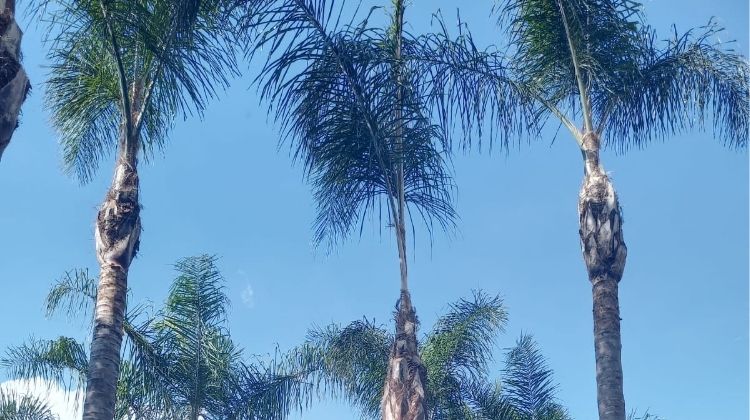
Most large palms are just a single, tall trunk with a crown on top.
For a tree feller, this is a major challenge.
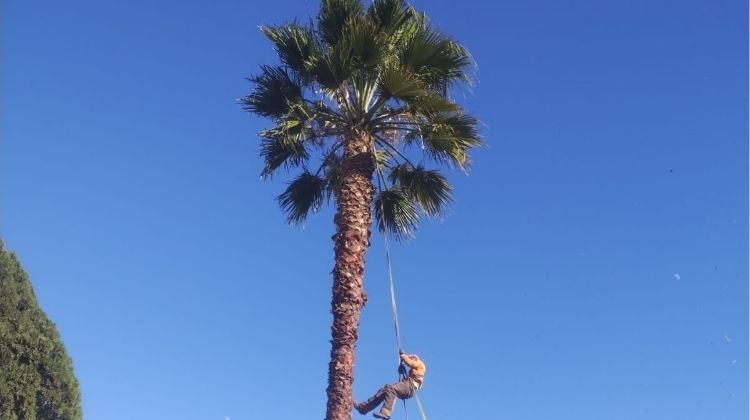
There are no lower branches to help a climber get up, and the smooth bark offers little grip.
This often means we need specialised climbing techniques or even a crane to reach the crown safely, adding significant time and equipment costs to the job.
The Heavy, Hazardous Crown
The crown is the most dangerous part.
A palm’s “head” of fronds is surprisingly heavy, and many species, like the Date Palm, develop a thick “beard” of old, dead fronds.
This dense mass can weigh hundreds of kilograms and often hides beehives or other pests.
Removing this crown piece by piece is a slow, high-risk process that requires careful rigging—it’s not a job for a novice with a chainsaw.
Breaking Down the Palm Tree Removal Cost: A Line-Item Comparison
To truly understand your quote, it helps to see a direct comparison between removing a standard tree and a palm tree.
While a standard tree removal might seem similar on the surface, the palm tree removal cost is higher due to fundamental differences in labour, equipment, and waste.
A professional palm tree felling service must account for these unique factors to ensure the job is done safely and properly.
Labour: Technical Skill vs. Basic Felling
The skill and time required for labour are where the most significant cost differences begin.
Standard Tree Removal:
- A standard tree, like a Blue Gum or a Rooikrans, with good access can often be felled in one piece or in large sections.
- The work is still skilled but is generally more straightforward, with arborists using branches as anchor points.
- The team can frequently work efficiently from the ground, making the process quicker.
Palm Tree Removal:
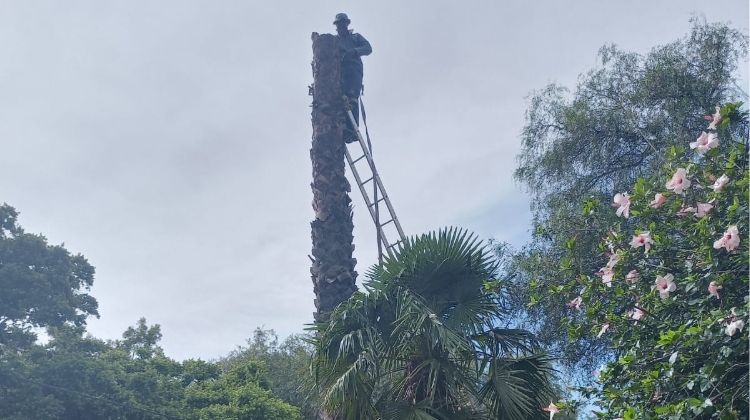
- Palms almost always require a meticulous “top-down” approach. The heavy, hazardous crown must be dismantled first, frond by frond, followed by the trunk being cut down in small, controlled sections.
- This is a slow, precise process that cannot be rushed. Each piece must be carefully rigged and lowered with ropes to prevent damage to your property.
- The team is performing high-risk, technical work at height for the entire job, which naturally commands a higher labour cost due to the expertise and time required.
Equipment: Standard Gear vs. Specialised Solutions
The tools needed for the job directly impact the final palm tree removal cost.
A standard tree job uses common equipment, while a palm often requires a more heavy-duty solution.
Standard Tree Equipment:
- Professional chainsaws, ropes, and a standard wood chipper are typically sufficient for most indigenous trees.
- The equipment is robust but commonly used and readily available for most tree services.
Palm Tree Specialised Equipment:
- Cranes or High-Reach Platforms: For palms over 8 meters, a crane is often essential for safety in the Western Cape or Johannesburg suburbs, typically adding R 5,000 – R 15,000+ to the bill. This is the single biggest equipment cost.
- Heavy-Duty Chippers: The stringy, fibrous material of palm fronds and trunks can easily jam a standard chipper. More powerful, industrial-grade chippers are required, which cost more to operate, maintain, and transport.
- Advanced Rigging Gear: The unpredictable nature of the palm’s trunk often requires more complex and robust rigging systems to safely control the descent of each heavy piece, especially when working near a house or pool.
Waste Disposal: Wood Chips vs. Bulky Green Waste
What’s left behind after the job is another major, and often overlooked, cost driver.
Standard Tree Waste:
The tree is converted into manageable logs and a pile of wood chips.
This material is relatively easy to transport, and the chips can often be repurposed as garden mulch or disposed of without excessive fees at local dump sites.
Palm Tree Waste:
A single palm tree generates a surprising volume of bulky, heavy green waste.
The fronds are difficult to compact, and the fibrous trunk does not chip efficiently.
This means far more truckloads are required to haul the waste away.
With dump fees at registered sites like those in the Western Cape or Pretoria costing per ton, plus the added fuel and time for multiple trips, the disposal costs for a palm are significantly higher than for a standard tree.
This logistical challenge is a key component of the overall palm tree removal price.
Standard Tree vs Palm Tree Removal Price Comparison
| Factor | Standard Tree | Palm Tree | Impact on Cost |
| Labour | Approach Often felled in one piece or large sections | Requires slow “top-down” removal, piece by piece | Palm trees cost more due to longer, more technical work |
| Climbing & Access | Branches provide anchor points for climbers | Smooth trunk with no branches; often requires a crane | Crane hire adds R5,000-R15,000+ to the bill |
| Equipment Needed | Standard chainsaws and chipper | Heavy-duty chipper and advanced rigging gear | Specialised equipment is more expensive to operate |
| Waste Type | Manageable logs and wood chips | Bulky, heavy green waste and fibrous material | Higher disposal fees due to more truckloads needed |
| Safety Risk | Predictable wood grain and fall pattern | Unpredictable fibrous trunk; heavy crown risk | Higher insurance costs factored into the price |
The Risk Factor: How Safety Concerns Impact Palm Tree Felling Price
When you receive a quote for palm tree removal, a significant portion reflects the cost of managing unique safety risks.
Unlike standard trees, palms present dangers that require specialised training, careful planning, and additional safety measures – all of which directly influence the final palm tree removal cost.
A professional palm tree felling service must price their work to ensure no corners are cut when it comes to safety.
Unpredictable Fall Patterns
The fibrous structure of a palm trunk makes its behaviour during cutting highly unpredictable.
- Unlike woody trees that typically follow their lean, palm trunks can split, twist, or kick back violently when cut.
- This unpredictability requires more complex cutting techniques and safety setups, adding time and expertise to the job.
- Each cut must be carefully planned and executed, slowing down the process but ensuring control.
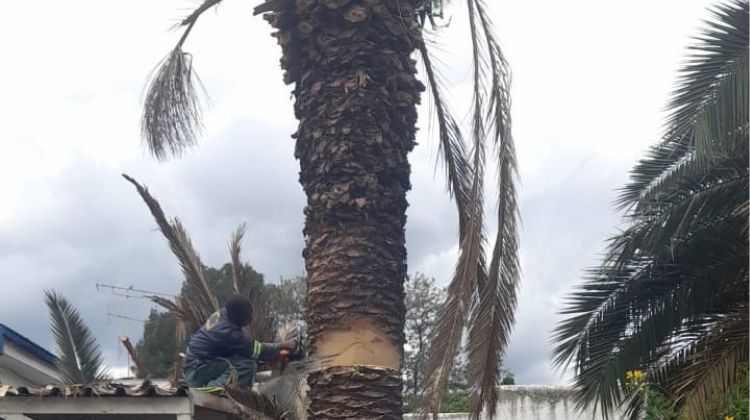
Working at Height Without Anchor Points
The combination of extreme height and smooth, branchless trunks creates unique access challenges.
- No Natural Anchors: Climbers have no branches for secure positioning, requiring advanced climbing techniques.
- Increased Fall Risk: Working on smooth trunks at height significantly increases the danger for arborists.
- Need for Mechanical Assistance: These height risks often make crane assistance necessary rather than optional, substantially adding to equipment costs.
Insurance and Liability Considerations
The elevated risk profile of palm tree removal directly impacts business operating costs.
- Specialised arborist insurance premiums are significantly higher for companies that regularly work with high-risk trees like palms.
- This essential insurance coverage, which protects both the workers and your property, is factored into service pricing.
- The comprehensive coverage required for palm work represents a substantial business expense that must be reflected in the palm tree felling service pricing structure.
These risk factors collectively contribute to why palm tree removal demands professional expertise and justifies its cost compared to standard tree removal.
Palm Tree Removal Cost Guide: Realistic South African Pricing
Understanding the factors behind the costs is one thing, but what can you actually expect to pay for professional palm tree removal in South Africa?
The following palm tree removal cost guide provides realistic price ranges to help you budget effectively.
These figures reflect the specialized nature of the work performed by a qualified palm tree felling service, though your final quote will be determined by your specific situation.
Price Ranges by Tree Size and Complexity
The size and species of your palm are the primary drivers of the base palm tree removal price.
Location complexity can push these prices toward the higher end of each range.
Small Palms (up to 6m): R 2,500 – R 6,000
Ideal for species like the Dwarf Date Palm.
These can often be managed by skilled climbers without the need for a crane, unless they are positioned directly over a structure or pool.
Medium Palms (6m – 12m): R 6,000 – R 15,000
This range covers many common Queen and Date Palms found in suburban gardens.
Crane assistance becomes more likely here, especially if the tree is in a confined space or has a heavy crown.
Large Palms (12m+): R 15,000 – R 35,000+
This includes towering species like the Washingtonia (Mexican Fan Palm) or Coconut palm.
These jobs almost always require a crane for safe dismantling and involve significantly more complex rigging and waste management, justifying the higher cost.
Essential Additional Services & Costs
The base price for felling the tree often doesn’t include everything.
Be sure to get a detailed breakdown from your palm tree felling service.
Crane Hire
This is a major added expense, typically ranging from R 5,000 for a small mobile crane to R 20,000+ for a large truck-mounted crane needed for big jobs or difficult access.
Stump Removal/Grinding
Budget an additional R 750 – R 3,000+.
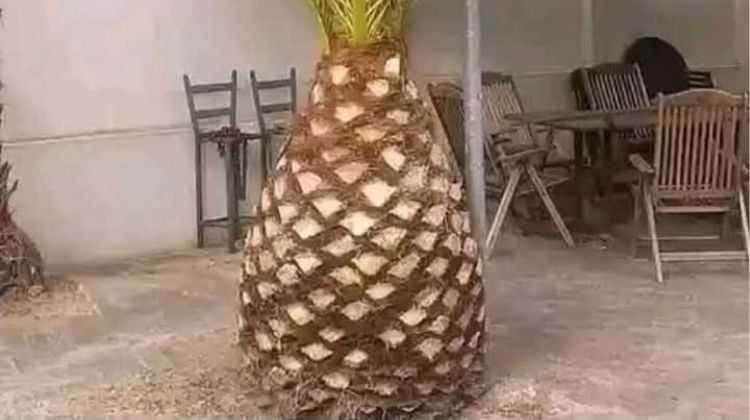
Palm stumps are notoriously tough on equipment due to their dense, fibrous nature, which wears down grinding teeth faster than hardwood stumps.
Waste Removal
Always confirm if the quote includes hauling away all the green waste.
The bulky fronds and trunk sections take up substantial space in a truck, meaning multiple trips to the dump and higher disposal fees—a significant but often hidden component of the total palm tree removal cost.