Understanding South Africa’s Tree Protection Laws and Regulations
The entire legal foundation for protecting trees in South Africa rests on the National Forests Act of 1998 (NFA).
This powerful legislation provides the national government, specifically the Minister of Forestry, Fisheries, and the Environment, with the authority to declare certain trees as protected.
This special status makes it illegal for anyone to cut, disturb, damage, destroy, or even possess any part of these trees without a valid license granted by the Department of Forestry, Fisheries, and the Environment (DFFE).
It is important to understand that this protection is not a broad, vague rule but a carefully considered measure applied specifically to trees that are deemed critically important for the nation’s natural and cultural heritage.
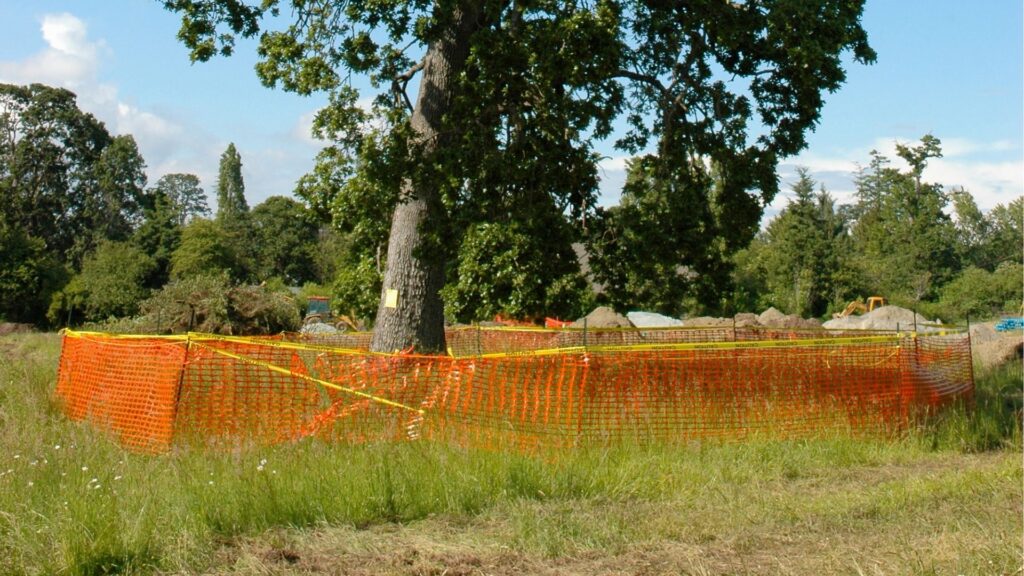
Under the NFA, there are two distinct categories of protected trees that every homeowner must know about. Confusing these two can lead to serious legal trouble.
1. Protected Tree Species
This is the broader and more common form of protection.
The Minister officially declares an entire species as protected due to their rarity, threatened conservation status, or unique ecological value.
The key here is that every single tree of that species is protected, regardless of its size, age, or location.
This means a small, young Sapling of a protected species in your backyard has the same legal status as a giant, ancient one in a forest.
The most current official list of these species was published in Government Notice No. 1161 (GG 39433) on 20 November 2015.
It includes well-known trees like the Stinkwood (Ocotea bullata), various Yellowwoods, and the Pepper-bark Tree.
2. Champion Trees
This is a separate, more specific category.
A Champion Tree is not an entire species but a specific individual tree or a small, defined group of trees that is protected due to its exceptional attributes.
This status is granted for reasons like:
- Immense size or exceptional age for its species.
- Notable historical significance (e.g., a tree under which a famous treaty was signed).
- Profound cultural importance to a community.
- Being an outstanding example of its species.
Unlike protected species, this status is not automatic.
A tree is formally declared a Champion Tree through an official process, often initiated by public nomination but ultimately decided by experts and gazetted by the DFFE.
Table: Categories of Protected Trees in South Africa
| Category | What It Means | Example | Governing Authority |
| Protected Species | Every tree of a specific species is protected, everywhere. | Real Yellowwood (Podocarpus latifolius), Marula (Sclerocarya birrea) | National DFFE |
| Champion Tree | A specific individual tree is protected for its unique qualities. | The Sagole Baobab (Limpopo), The Sophiatown Oak (Johannesburg) | National DFFE |
Why Trees Get Protected: Ecological and Cultural Criteria
The selection of trees for protection is never arbitrary.
The criteria are multifaceted and deeply considered, focusing on the tree’s overall value to the environment and society.
Ecological Significance
Many trees are protected because they serve as a keystone species within their ecosystem.
This means they provide a vital food source, shelter, or nesting site for threatened animals, insects, or other plants.
The removal of a single such tree can disrupt the entire local ecosystem, triggering a cascade of negative environmental impacts that affect biodiversity far beyond your property line.
Cultural and Historical Value
South Africa’s history is deeply rooted in its landscape.
Many protected trees are living monuments to this past.
They may have been the site of a significant historical meeting, a spiritual gathering place for indigenous communities for centuries, or a landmark on an old trade route.
The famous Sophiatown Oak in Johannesburg, for instance, is a Champion Tree that survived the forced removals of the 1950s.
Making it a powerful symbol of resilience and a tangible link to our shared heritage.
Aesthetic and Economic Value
Sometimes, a tree is protected simply for its remarkable beauty, its contribution to the character of a neighbourhood, or its value to the local economy.
An exceptionally large or beautiful tree can be a major tourist attraction, bringing revenue to a community.

This category of protection recognizes that trees are valuable community assets that contribute to our collective well-being and prosperity, encouraging us to see them as resources to be treasured in perpetuity.
How to Identify a Protected Tree: A Step-by-Step Process
Your first and most critical step is always to consult the official list of protected species.
This list is your primary legal reference.
The list is updated via government gazettes as needed; the current definitive list was gazetted in 2015.
You can find it on the DFFE website by searching for “protected tree species list” or the specific government gazette number.
Pro Tip: When using the list, always use the scientific name (e.g., Adansonia digitata for the Baobab).
Common names like “Yellowwood” can refer to several different species and create dangerous confusion.
The scientific name is universal and precise.
However, the official list only helps if you already know your tree’s name.
If you don’t, you need to become a “tree detective.”
Practical Tips for Identifying Trees on Your Property
Identifying a tree is a rewarding process of observation.
Grab a notebook and look for these clues:
- Examine the Leaves: Look closely. Are they simple (a single blade) or compound (multiple leaflets)? How are they arranged on the stem—opposite each other, alternating, or in a whorl? Note their colour, texture, and shape.
- Look at the Bark: The bark can be a fantastic identifier. Is it smooth, rough, deeply furrowed, or does it peel away in strips or papery layers? Note its colour and texture.
- Find the “Signature”: Flowers, fruits, nuts, and seeds are often the most reliable clues. The large yellow fruit of a Marula, the distinctive pods of an Acacia, or the unique cones of a Yellowwood are dead giveaways. If you can, take pictures during different seasons to capture these features.
- Consider the Overall Form: Step back and look at the tree’s overall shape. Is it tall and straight, short and sprawling, or does it have a distinctive umbrella-like canopy? Note its size and growth pattern.
Important: While these tips are helpful, always confirm your findings with a qualified arborist or forestry consultant.
They can provide a definitive identification, which is crucial given the severe legal and financial implications of misidentifying a protected tree.
Iconic Protected and Champion Trees of South Africa
While the official list contains hundreds of species, some trees have become iconic symbols of South Africa’s natural heritage.
- The Baobab (Adansonia digitata): The iconic “Tree of Life,” protected for its immense cultural significance and incredible water-storing trunk. Specific specimens, like the Sagole Baobab, are also Champion Trees.
- The Real Yellowwood (Podocarpus latifolius): South Africa’s national tree, a protected species symbolizing our ancient forest heritage.
- The Marula (Sclerocarya birrea): A protected species crucial to rural economies and culture, known for its delicious fruit used in foods and cosmetics.
- The Pepper-bark Tree (Warburgia salutaris): A critically endangered and protected species, highly sought after for its medicinal bark, making its conservation urgent.
- The Tamboti (Spirostachys africana): A protected species known for its beautiful, durable wood and its unique, poisonous milky latex.
Table: Potential Consequences of Illegal Tree Felling
| Violation | Potential Fine | Potential Imprisonment | Governing Law |
| Damaging a Nationally Protected Tree | Up to R5 million | Up to 15 years | National Forests Act |
| Violating Municipal Bylaws | Varies by municipality (Often tens of thousands of Rands) | Possible, depending on the bylaw | Local Municipal By-Laws |
What to Do If You Discover a Protected Tree on Your Property
If your detective work leads you to suspect you have a protected tree, it is vital to follow a careful, lawful process.
Do Not Disturb
This is the most important rule.
Under no circumstances should you cut, prune, damage, or disturb the tree or its roots in any way.
Even if the tree is dead, it may still be protected, and you still require a permit for its removal.

Any action without a permit is a criminal offense.
Call a Professional
Do not guess.
Contact a qualified and experienced arborist (look for SAACA certification) or a forestry consultant.
They possess the expertise to provide a definitive identification and can guide you on the correct legal procedures specific to your situation and municipality.
You might also be interested in: Tree Stump Removal in South Africa – A Homeowner’s Ultimate Guide